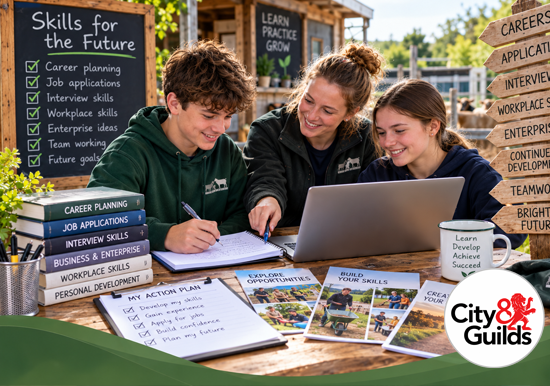
Our Level 2 Preparing for Employment pathway supports learners moving towards work, apprenticeships, further training or vocational study. Learners develop transferable skills, business understanding and greater independence through realistic workplace scenarios and practical projects.
Seven selected units provide 16 credits, combining career planning, business awareness, continuing professional development, workplace communication, teamwork and practical skills. The course is relevant to a range of industries, with optional farm-based examples and projects.
The programme can be studied individually or alongside suitable Animal Care, Horticulture and Land-Based Construction learning, subject to agreed teaching and assessment arrangements.
The City & Guilds Level 2 Certificate in Employability Skills is designed to develop transferable skills for employment and further learning. This Preparing for Employment pathway builds on introductory work-related learning, placing greater emphasis on planning, communicating, solving problems and completing tasks responsibly.
Learners aged 14+ who are considering employment, apprenticeships, volunteering or further vocational training. It may suit learners progressing from Level 1 Employability Skills or those assessed as ready to work at Level 2.
There are no formal prior qualification requirements. We assess individual suitability, readiness for Level 2 assessment and any learning support or reasonable adjustments before enrolment.
Learners may progress into vocational qualifications, apprenticeships, further education, supported work opportunities or employment, according to their interests, achievements and individual circumstances.
Our selected Preparing for Employment programme includes seven units, totalling 16 credits and 106 selected-unit guided learning hours.
Explore career options, identify suitable opportunities and prepare applications relevant to personal goals.
Practise clear and appropriate workplace communication through discussions, messages and realistic scenarios.
Choose a relevant practical skill, develop it through practice and demonstrate improvement. Activities may come from different sectors, including optional farm-based projects.
Explore why people continue learning at work and how training and development can support future progression.
Investigate what is involved in starting a small business, using suitable business ideas and examples.
Develop ways to plan work, prioritise tasks and use time effectively.
Develop cooperation, shared responsibility and constructive participation in workplace-style team activities.
Learning can use workplace scenarios, business activities, digital resources and selected practical tasks. All activities and evidence must meet the official unit assessment criteria.
Flexible, personalised teaching combines tutor-led sessions, career and business activities, workplace scenarios, digital learning and practical projects where appropriate. The qualification is not limited to land-based employment. Attendance and duration are agreed individually.
The selected units total 106 guided learning hours; the qualification has 150 total qualification hours, including preparation and study outside direct tutor guidance.
Learners can apply communication, time management, teamwork and practical development through suitable real-world projects. Farm activities are one possible context, not a compulsory focus. Individual achievement must be evidenced.
Assessment is through an individual portfolio of evidence, which may include tutor observations, learner work, plans, practical records, professional discussions and reflections. There is no external written examination. All selected unit criteria must be met, and the qualification is graded Pass/Fail.
Reasonable adjustments may be considered in line with City & Guilds requirements.
After completing the Level 2 Certificate, learners may consider:

Build specialist skills through further Animal Care, Horticulture or Land-Based Construction qualifications, according to individual suitability.

Combine vocational learning with broader preparation for work and increased independence through a structured part-time pathway.

Explore additional qualifications through flexible teaching arrangements suited to individual interests and future goals.
Use your skills and evidence of achievement to explore appropriate college courses, apprenticeships, supported work or employment opportunities.
Progression depends on each learner's achievements, abilities, interests and readiness for the next step.

Practical Education Beyond the Classroom
Providing practical, farm-based education, recognised qualifications and alternative learning opportunities at Frampton Farm in Kent and Poppies Farm in Berkshire, helping young people develop confidence, independence and skills for the future.
Access course materials, complete theory activities and keep up with your learning using Moodle.
Download the Moodle app for your phone or tablet.


Fees & Funding
Course fees
Fees depend on the centre, delivery arrangements and individual support required. We will confirm tuition, registration and certification charges before enrolment.
Privately funded places
Parents, carers and learners can enquire about individual programmes and flexible start dates.
School and local authority funding
Schools and local authorities may commission placements as part of vocational education, alternative provision or agreed education packages.
Enquire
Contact your preferred learning centre to discuss suitability, availability and costs.