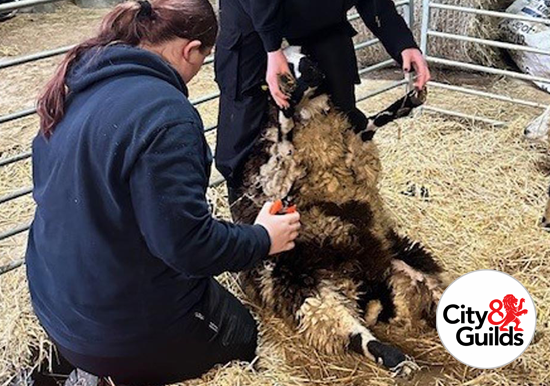
Our City & Guilds Level 3 Certificate in Animal Management is a nationally recognised vocational qualification for learners who want to deepen their knowledge of animal health, welfare and management.
Delivered in a working farm environment, the course combines practical animal care, investigations and classroom teaching with independent research and written assignments at home. Learners develop the skills to assess animal needs, plan care, interpret observations and explain their decisions.
The programme is suitable for learners progressing from Level 2 Animal Care and those joining with relevant interests or experience. Previous animal care qualifications are not essential; individual suitability is assessed before enrolment.
Successful learners may progress to the Level 3 Subsidiary Diploma in Animal Management through an additional year of study, subject to qualification and enrolment requirements.
The Level 3 Certificate in Animal Management provides an opportunity to develop more advanced animal care knowledge and practical competence. Learners study four units covering animal health, accommodation, feeding and behaviour.
Teaching is based around real examples from the farm, with shorter periods of theory interspersed with practical activities, observations and investigations. Learners also complete structured self-study, research and written work between sessions.
Learners primarily aged 16 and above who are interested in animal care, welfare or future employment and study in the animal sector. Younger applicants may be considered individually.
Those progressing from a Level 2 Animal Care course, as well as suitable new learners without a previous animal care qualification.
Home-educated learners and young people who benefit from combining practical learning with academic study, including learners requiring individually planned support.
This course is primarily designed for learners aged 16 and above. Younger learners may be considered individually, only where City & Guilds registration rules permit and the centre confirms their suitability.
Previous animal care qualifications are not essential. Learners should be ready for Level 3 study, including independent research, self-study, written assignments and practical assessments. Successful completion of a Level 2 Animal Care qualification or strong GCSE English grades may help demonstrate academic readiness, but neither automatically guarantees admission or overrides awarding organisation age requirements.
Our initial assessment considers previous qualifications, practical experience, academic ability, maturity, safe working and individual support requirements. Enrolment is subject to individual suitability and City & Guilds requirements.
On successful completion, learners may progress to the Level 3 Subsidiary Diploma in Animal Management by studying additional units, subject to the awarding organisation's rules and individual suitability.
Learners study four Level 3 units, combining animal observations, practical farm activities, theory, independent research and written assignments.
Investigate signs of health and illness, causes and prevention of disease, health monitoring, biosecurity and animal health management. Learners apply their knowledge through supervised observations, record keeping and health-planning activities.
Explore how accommodation affects welfare, safety and behaviour. Learners assess the requirements of different species, evaluate housing conditions and consider how accommodation is prepared, maintained and improved.
Develop feeding plans based on animal needs, examine feed types and feeding practices, and monitor and evaluate feeding arrangements using records and practical observations.
Investigate normal and abnormal behaviour, communication, influences on behaviour and animal welfare. Learners observe animals, record and interpret behavioural data and evaluate their findings.
Practical sessions help learners apply Level 3 knowledge to real animals and husbandry decisions. Independent research, self-study, written assignments and analysis of observations help develop organisation, problem-solving and critical thinking skills.
Our planned small-group programme runs for one day per week over one academic year, supported by structured independent study at home. Availability and delivery arrangements are confirmed before enrolment.
Farm sessions combine tutor-led teaching, practical animal care, investigations and supervised observations. Theory is broken into manageable periods alongside practical activities.
Individual or hybrid arrangements may be considered where appropriate and available. Any remote learning or alternative practical assessment arrangements must meet City & Guilds requirements.
Learners should expect approximately three hours of independent study each week, including Moodle activities, research, reading, assignment preparation and written work. The actual workload varies by learner and assessment stage.
Assessment takes place throughout the programme and may include written assignments, research, practical tasks, observations and portfolio evidence, as required by the current City & Guilds assessment pack.
Tutors provide teaching, feedback and appropriate support during learning. Learners must independently demonstrate the knowledge and skills required by each assessment criterion, with any permitted reasonable adjustments considered individually.
Fees depend on the learning centre, delivery option and level of individual support required. Current fees, payment arrangements and any City & Guilds registration or certification charges will be explained before enrolment.
Parents and carers can enquire about privately funded places, subject to availability and suitability.
Placements may be commissioned by schools, local authorities or other educational organisations, including appropriate alternative provision or EOTAS arrangements. Funding must be agreed with the commissioning organisation.
Please contact the relevant learning centre for current prices, availability and payment information.
After successfully completing the Level 3 Certificate in Animal Management, learners may be able to progress to:

Continue into a second year covering investigative projects, estate skills and farm livestock husbandry, subject to eligibility and qualification requirements.

Explore further vocational study, volunteering, work experience or appropriate opportunities in the animal care sector.
Progression depends on each learner's achievements, interests and the entry requirements of the next programme.

Practical Education Beyond the Classroom
Providing practical, farm-based education, recognised qualifications and alternative learning opportunities at Frampton Farm in Kent and Poppies Farm in Berkshire, helping young people develop confidence, independence and skills for the future.
Access course materials, complete theory activities and keep up with your learning using Moodle.
Download the Moodle app for your phone or tablet.